Ecosocialism, theory and praxis: a core axis of bolivarian socialism
DOI:
https://doi.org/10.66821/3ybqpx65Keywords:
Ecosocialism, Bolivarianism, Ecology, Praxis, SustentabilityAbstract
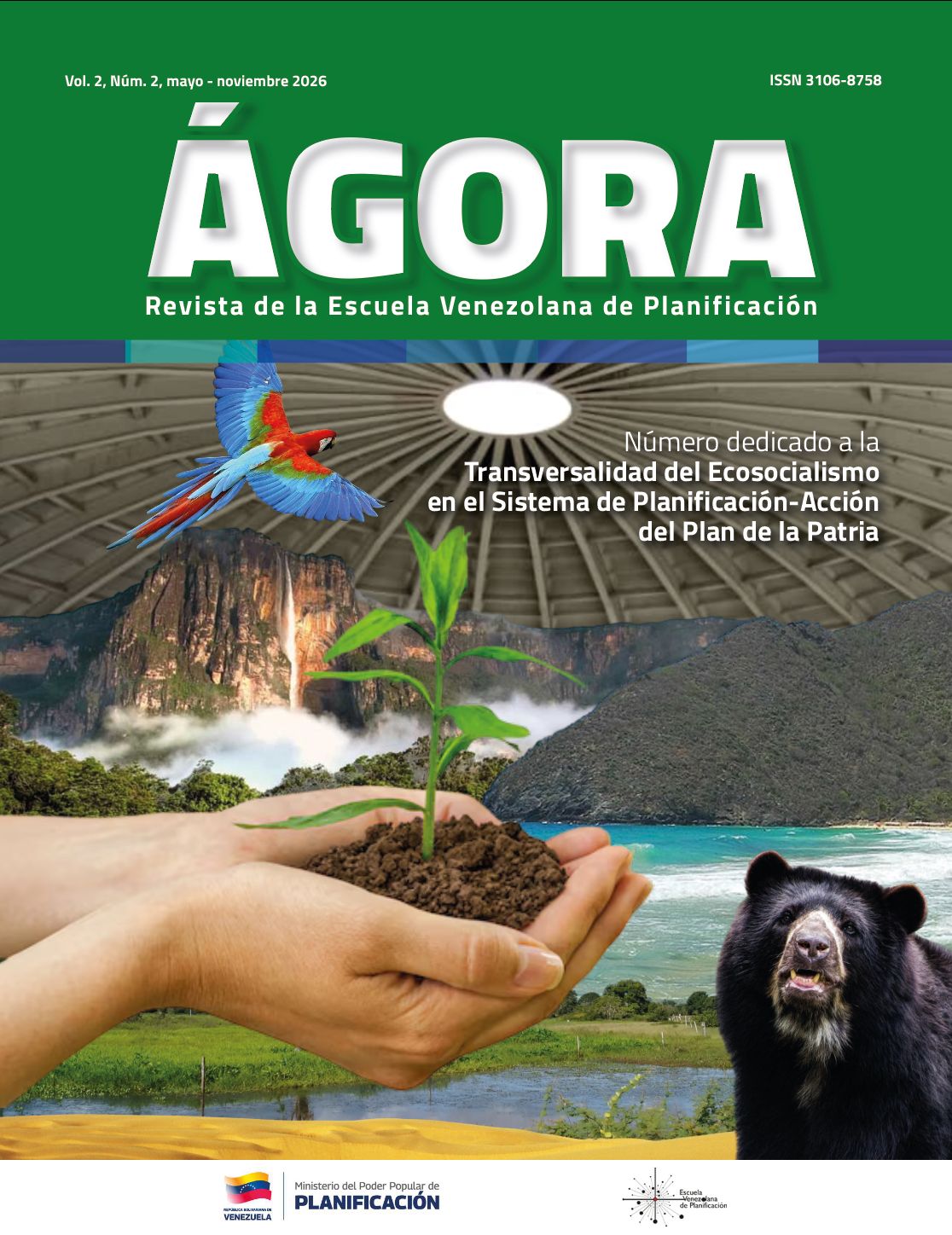
Ecosocialism emerges as a critical synthesis of ecological thought and Marxism, framing the environmental crisis as consequence of the unlimited accumulation of capital. As a philosophical doctrine, it advocates a radical transformation that prioritizes the preservation of life over exchange value. The historical trajectory toward the ecosocialist paradigm can be traced back to the Decree of Chuquisaca, promulgated by Simón Bolívar in 1825. In the second quarter of the twentieth century, institutions responsible for environmental conservation were established and strengthened, followed by a surge in the production of environmental knowledge during the 1960s and 1970s. The neoliberal influence of the 1980s undermined institutional sustainability and the production of data. A decisive paradigmatic shift occurred with the proposal of El Libro Azul. In the 21st-century the ecosocialism constitutes a central pillar of Bolivarian Socialism. It is grounded in the doctrines of Bolívar, Zamora, and Chávez, and is established as a historical objective within the Plan de la Patria and the 7T framework. Its praxis presents significant challenges within the Venezuelan context, particularly regarding oil extraction, water resource management, the Arco Minero del Orinoco, the Llanos and Andean regions, and incursions into marine and coastal ecosystems. Through the implementation of the Gran Misión Madre Tierra Venezuela, efforts are directed toward addressing these challenges by advancing climate change adaptation and mitigation, promoting agroecological production, conserving soils and water resources, and ensuring the country’s ecological sustainability.
Downloads
Downloads
Published
Issue
Section
License
Copyright (c) 2026 ÁGORA

This work is licensed under a Creative Commons Attribution 4.0 International License.