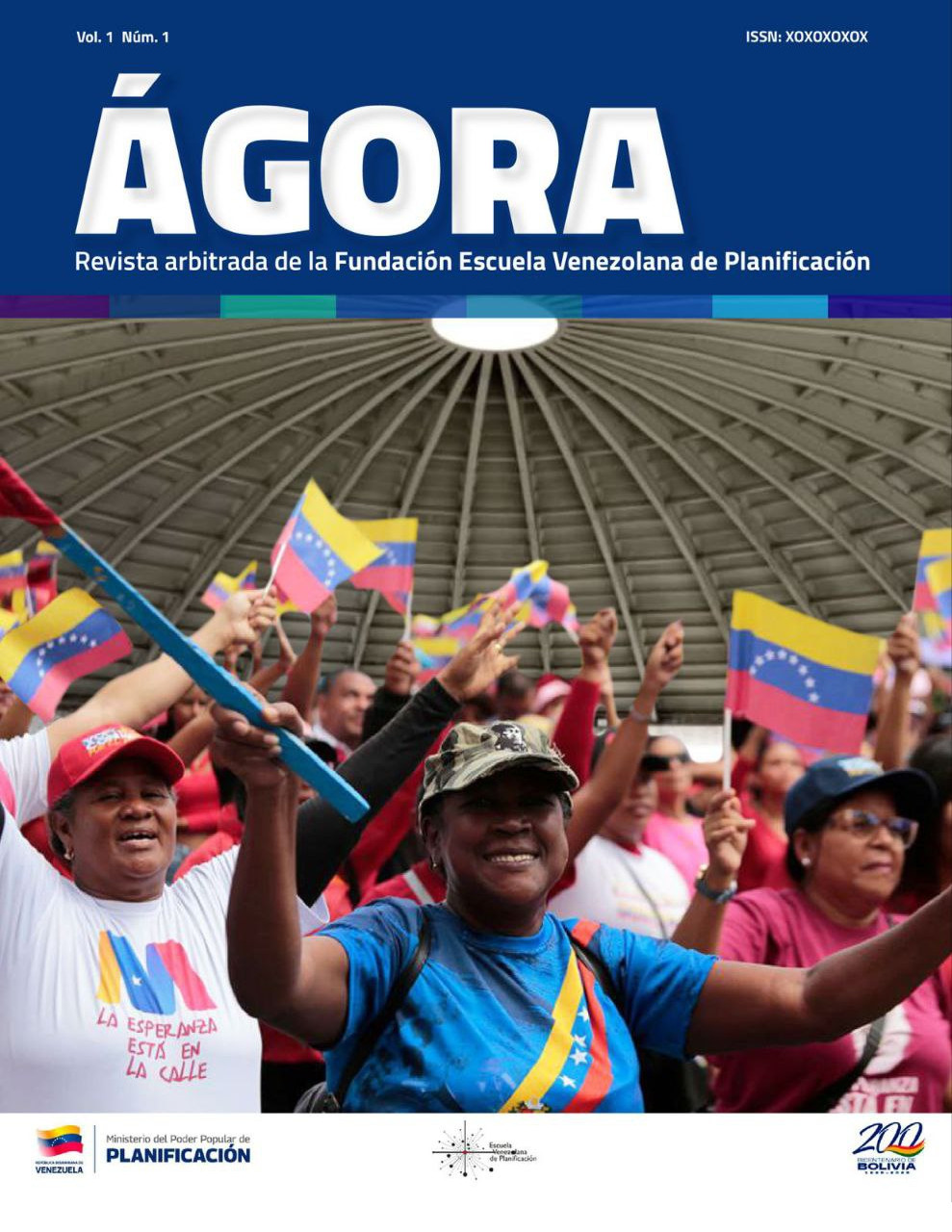
The Teaching State and its Legal-Philosophical Implications
A Reflection From Strategic Planning
Keywords:
Teaching state, Education law, Philosophy of education, Strategic planning, Planned system of permanent systemic formationAbstract
The term "El Estado Docente" (The Teaching State) first emerged during the presidency of Rómulo Gallegos and was later clearly defined by Luis Beltrán Prieto Figueroa. It establishes an educational and pedagogical vision of the state that innovates its orientation and, in turn, shapes a model for strategic planning of citizen education. This concept and its relevance for transforming the nation through education is the motivation for the following research. The research's objective is to analyze the legal-philosophical implications derived from the concept of the teaching state in the territorialized strategic planning of the State in education. This will be framed within a legal perspective and educational philosophy, allowing the analysis to shift from the legal to the philosophical and vice versa to find the conceptual truth of the study. To achieve this purpose, a documentary methodology was used, employing the critical discourse analysis of Wodak and Meyer (2003) as the technique that considers a textual corpus for its study. This is assumed to be a social act that describes the person who issues it and their perception of power and its repercussions. The study will present the doctrine of the Teaching State, its implications, and its current evolution in the application of a permanent integrated system of systemic planning, which is an example of planning in and from the territory.
Downloads
Downloads
Published
Issue
Section
License
Copyright (c) 2025 ÁGORA

This work is licensed under a Creative Commons Attribution 4.0 International License.